
In the past some small, isolated, combinations of renewable electricity and hydrogen production, were demonstrated: these projects were limited in capacity and relatively short in duration. Topics as ‘overall efficiency’, ‘total cost of ownership’, ‘codes/standards’, ‘impact of different pricing levels of electricity’ have yet not been addressed in a comprehensive way.
The project Don Quichote is the next logical step towards the integration of ‘renewable electricity’ and ‘hydrogen’.
The project aims to
- Intensively demonstrate and validate the system level technology readiness
- Generate further facts based data for the exploitation of renewable electricity to hydrogen fuelled sustainable mobility
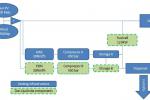
Based on regional funding in 2011 a hydrogen refuelling station has been put in operation near Brussels with the following specifications
- On-site electrolysis, storage capacity 65 kg/day, 450 bar
- Use of alkaline electrolyser with a footprint only half of the current standard footprints, and coupled to the grid
- In the direct neighborhood (< 100 m) 1,5 MW wind turbine and 1050 kW of solar panels
- Refuelling fuel cell based forklifts in a three shift operation
Starting from this system as an existing test platform, the following innovations and demonstrations will be carried out within this project:
- Extensive testing of the existing system, focused on dynamic behavior, efficiencies, actual degradation figures, availability, total cost of operation
- Doubling the hydrogen capacity by adding a very efficient and dynamic PEM-electrolyser (storage 130 kg/day)
- Developing, testing, demonstration and validation of direct coupling between wind turbine (1,5 MW) and solar panels (800 kW) and the electrolyser technology
- Adding of the conventional piston compressor by a new, high efficient compressor system based upon electrochemical compression
- Upscaling of hydrogen applications (e.g. additional forklifts) in this refuelling station